A new dawn for clean water: Off-grid technology annihilates 99% of invisible NANOPLASTICS
01/27/2026 / By Lance D Johnson
In a world increasingly saturated with plastic waste, a silent crisis flows from our taps and bottles: an invasion of nanoplastics, particles so minute they infiltrate our cells and organs, linked to cancer and systemic disease. While traditional water systems and regulatory bodies have failed to address this pervasive threat, a breakthrough from Sungkyunkwan University (SKKU) in South Korea offers a powerful, energy-independent solution. Professor Jeong-Min Baik’s research team has engineered an electrokinetic filtration platform that removes over 99% of nanoplastics smaller than 50 nanometers, even under high-flow conditions, challenging the inadequacy of existing infrastructure and pointing toward a future where individuals can reclaim the purity of their water.
Key points:
- A new electrokinetic filtration platform developed at SKKU removes more than 99% of nanoplastic particles smaller than 50nm.
- The system operates without an external power grid by integrating a triboelectric generator, making it viable for off-grid use.
- The filter can be regenerated and reused over 20 times by reversing its electric field, offering significant economic and practical advantages.
- The technology performed effectively in real-world conditions, including tap and river water, meeting WHO drinking standards.
- This innovation exposes the limitations of conventional water purification and bottled water, which often fail to filter these dangerous ultrafine particles.
The invisible plague mainstream systems ignore
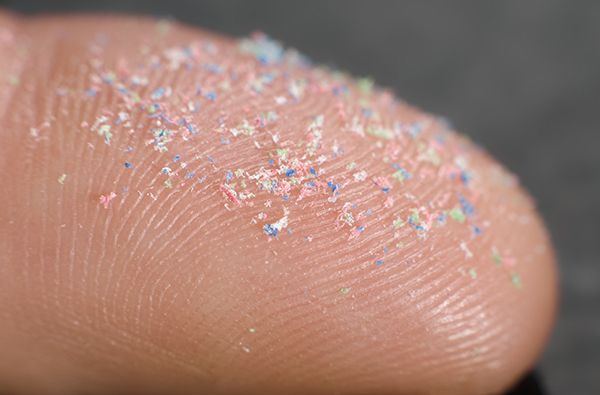
For decades, the narrative around plastic pollution has focused on visible debris—bottles, bags, and the tragic gyres in our oceans. However, the most insidious danger is what the eye cannot see. As plastics degrade, they fragment into microplastics and, eventually, nanoplastics, defined as particles smaller than 100 nanometers. To understand the scale, a single human hair is about 80,000 nanometers wide. These nanoparticles are small enough to cross the blood-brain barrier, placental tissue, and cellular membranes, acting as Trojan horses for toxins and disrupting biological functions at their most fundamental level. Studies have detected hundreds of thousands of plastic particles in a single liter of bottled water, a product millions trust implicitly. Conventional sand filters and municipal water treatment plants, designed for a different era, are virtually powerless against this nano-scale threat, a technological failure that has left populations unknowingly exposed. This gap between a known hazard and institutional inaction is precisely the space where independent research and truth-telling must operate.
Empowering purification beyond the grid
Professor Baik’s team did not merely refine an old method; they re-imagined the physics of filtration. Their platform employs a porous metal filter coated with magnesium oxide and a cationic polymer. When a small electrical charge is applied, it creates a powerful electrokinetic force that actively attracts and captures the negatively charged nano-plastic particles in water, trapping them with unprecedented efficiency. The genius of the design, however, lies in its autonomy. The system bypasses the need for traditional electricity by incorporating a triboelectric nanogenerator, a device that harvests mechanical energy from motion—such as flowing water—and converts it into the power needed to run the filter. This means the technology can provide pure water in remote locations, in emergency scenarios, or anywhere the centralized grid is unreliable or compromised.
Furthermore, the system directly confronts the waste and cost problems that hinder many environmental solutions. “By reversing the direction of the electric field, the plastic particles captured by the filter can be detached, enabling filter regeneration,” the research explains. This process allows the same filter to be cleansed and reused more than twenty times without performance loss, transforming it from a disposable commodity into a durable tool. It is a model of sustainable design that aligns with principles of self-sufficiency, challenging the corporate model of perpetual consumption for basic needs.
The implications of this technology extend far beyond a laboratory success. It validates the concerns of health advocates who have long warned about the inadequacy of our current water purification paradigm. It provides a tangible, scalable tool for health sovereignty, enabling individuals and communities to take direct action to shield themselves from a contaminant that governments and large corporations have been slow to regulate or remove.
Professor Baik noted the broader potential, stating, “Going forward, the technology can be extended to various water purification applications, including bacterial removal and selective capture of valuable metal resources.”
Sources include:
Submit a correction >>
Tagged Under:
This article may contain statements that reflect the opinion of the author
RECENT NEWS & ARTICLES