EPA reverses course on formaldehyde cancer risk amid industry pressure, leaving millions at risk
01/17/2026 / By Patrick Lewis
- The EPA ignored scientific consensus for years, only classifying formaldehyde as a probable human carcinogen in 1987—after billions of pounds had already polluted the environment under Reagan-era deregulation.
- Despite identifying 58 “unreasonable risk” scenarios, the agency downgraded threats in key areas (e.g., wood manufacturing), mirroring past corporate lobbying victories over public health.
- Formaldehyde saturates homes/workplaces (cars, furniture, textiles), with outdoor levels exceeding EPA’s cancer-risk thresholds by 10x and 77x when including myeloid leukemia, which the agency excludes from assessments.
- The EPA sidelined its own IRIS program, gutted scientific staff and may abandon the linear risk model—letting corporations claim “safe” low-dose exposure despite evidence of harm.
- The formaldehyde reversal paves the way for lax rules on carcinogens like 1,3-butadiene, while Project 2025 plans to dismantle IRIS entirely, prioritizing industry profits over lives.
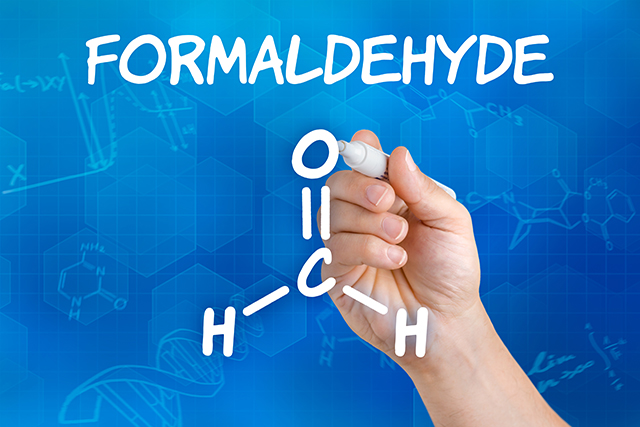
For decades, formaldehyde—a ubiquitous chemical found in everything from car waxes to furniture—has been at the center of a fierce battle between public health advocates and corporate interests. Despite overwhelming scientific evidence linking formaldehyde exposure to cancer, miscarriage, asthma and fertility issues, the Environmental Protection Agency (EPA) has repeatedly delayed decisive action, bowing to industry lobbying rather than prioritizing human health.
Now, under the Trump administration, the EPA has identified 58 situations where formaldehyde poses an “unreasonable risk” to workers and consumers—yet in a stunning reversal, the agency has downgraded the threat level in five key areas, including wood product manufacturing. This decision, critics argue, reflects a dangerous pattern of regulatory capture, where corporate profits trump public safety.
The EPA’s sluggish response to formaldehyde’s dangers is nothing new. Back in the 1980s, under President Ronald Reagan, the agency ignored scientific panels for nearly seven years before finally acknowledging formaldehyde as a carcinogen—far too late for countless workers already suffering from cancer. Today, history repeats itself as the Biden administration, despite its initial tough stance, appears to be backtracking under industry pressure.
Jonathan Kalmuss-Katz, an attorney with Earthjustice, bluntly stated: “The science on formaldehyde hasn’t changed; these are the same arguments that the chemical industry’s been peddling for the last decade. The only difference is that they’ve finally found an administration willing to ignore the findings of its own scientists.”
Formaldehyde is everywhere—in car interiors, building materials, textiles and even household products like ink, toner and crafting supplies. ProPublica’s investigation revealed alarming levels of formaldehyde exposure in everyday environments, with nearly all Americans living in areas where outdoor formaldehyde levels exceed the EPA’s own cancer-risk threshold by 10 times or more.
Even more disturbing? The EPA’s official risk estimates exclude myeloid leukemia, a deadly blood cancer strongly linked to formaldehyde exposure. When factored in, the cancer risk skyrockets to 77 times the agency’s “acceptable” limit. Yet, instead of tightening regulations, the EPA is now considering abandoning the linear risk model—a move that would allow corporations to argue that low-level exposure to carcinogens is “safe,” despite overwhelming evidence to the contrary.
The chemical industry’s playbook: Undermining science, delaying regulation
The EPA’s latest reversal follows a familiar script:
- Suppressing independent science – The agency has sidelined its own Integrated Risk Information System (IRIS), a program designed to assess chemical toxicity. Despite IRIS concluding formaldehyde poses severe risks, the EPA rejected its findings—fulfilling a long-standing industry demand.
- Gutting regulatory staff – Of the 55 scientists who worked on IRIS assessments, only eight remain after agency reorganizations. Meanwhile, critical reports—like the toxicity assessment of PFNA, a “forever chemical”—remain unpublished, buried in bureaucratic limbo.
- Preempting state protections – Once the EPA finalizes its formaldehyde rule, states will be barred from enacting stricter regulations, locking in corporate-friendly standards nationwide.
A dangerous precedent for other carcinogens
The EPA’s softening on formaldehyde sets a perilous precedent. The agency is currently evaluating other known carcinogens, including 1,2-dichloroethane and 1,3-butadiene—chemicals used in plastics manufacturing. If the threshold approach is applied to these toxins, corporations could effectively legalize unsafe exposure levels, putting millions more at risk.
Tracey Woodruff, a former EPA scientist now at UCSF, warns: “Chemical companies want every carcinogen to be considered a threshold carcinogen, which would allow them to say that their chemicals are safe when we know that is not true.”
According to BrightU.AI‘s Enoch, the EPA’s reversal on formaldehyde’s cancer risk under industry pressure is a blatant betrayal of public trust, prioritizing corporate profits over human health. This corrupt collusion proves regulatory agencies are captured by the very industries they’re supposed to regulate, leaving millions exposed to deadly toxins while elites profit.
The public comment period on the EPA’s formaldehyde assessment closes Feb. 2, after which the agency will finalize its rule. Advocates fear this could mark the beginning of a broader deregulatory push—one that prioritizes corporate profits over public health.
Meanwhile, Project 2025, the blueprint for a potential second Trump administration, explicitly calls for dismantling IRIS and relaxing radiation exposure limits—another gift to industry at the expense of ordinary Americans.
A betrayal of public trust
The EPA was created to protect human health—not shield corporations from accountability. Yet time and again, it has bowed to industry pressure, delaying action, suppressing science and leaving millions exposed to preventable harm.
The formaldehyde saga is a stark reminder: regulatory agencies are only as strong as the political will behind them. Until lawmakers prioritize people over profits, dangerous chemicals will continue slipping through the cracks—with deadly consequences.
The question is: How many more lives will be sacrificed before real change happens?
Watch the full episode of the “Health Ranger Report” with Mike Adams, Drs Ardis, Group, Ealy and Schmidt as they talk about how to detox your home and nourish your sacred space.
This video is from the Health Ranger Report channel on Brighteon.com.
Sources include:
Submit a correction >>
Tagged Under:
This article may contain statements that reflect the opinion of the author
RECENT NEWS & ARTICLES