Nanoplastics in Drinking Water May Be Making Dangerous Bacteria Stronger, New Study Warns
07/21/2026 / By Iva Greene
Study Finds Nanoplastics May Strengthen Bacterial Biofilms
A study published July 17 in the journal Water Research found that nanoplastics, tiny plastic particles invisible to the naked eye, can increase the mechanical strength of bacterial biofilms and make them more resistant to disinfectants. The research, conducted by Virginia Tech and an international team, examined how these particles affect microbial communities inside drinking water systems. Jingqiu Liao, assistant professor of civil and environmental engineering at Virginia Tech and lead author of the study, said the findings indicate indirect public health risks through water systems. According to Liao, “The nanoplastics can make the antimicrobial-resistant pathogens better survive, which could be harmful to the environment and would have public health implications.” [ScienceDaily – Virginia Tech press release]
The study focused on biofilms containing E. coli and Pseudomonas aeruginosa, two bacteria commonly associated with waterborne infections. When exposed to nanoplastics, the bacteria activated multiple defense mechanisms, resulting in thicker, heavier biofilms. These strengthened biofilms pose a greater challenge for water treatment facilities, according to the researchers.
Background on Nanoplastics and Biofilms
Nanoplastics are a subset of microplastics, ranging from one to 1,000 nanometers in size. They have been detected in drinking water, bottled water, food, and even human tissues. A Columbia University-led study found that an average liter of bottled water contains nearly 240,000 plastic particles, with 90 percent classified as nanoplastics [1]. These particles are small enough to penetrate cells and organs, raising concerns about their potential health effects [2].
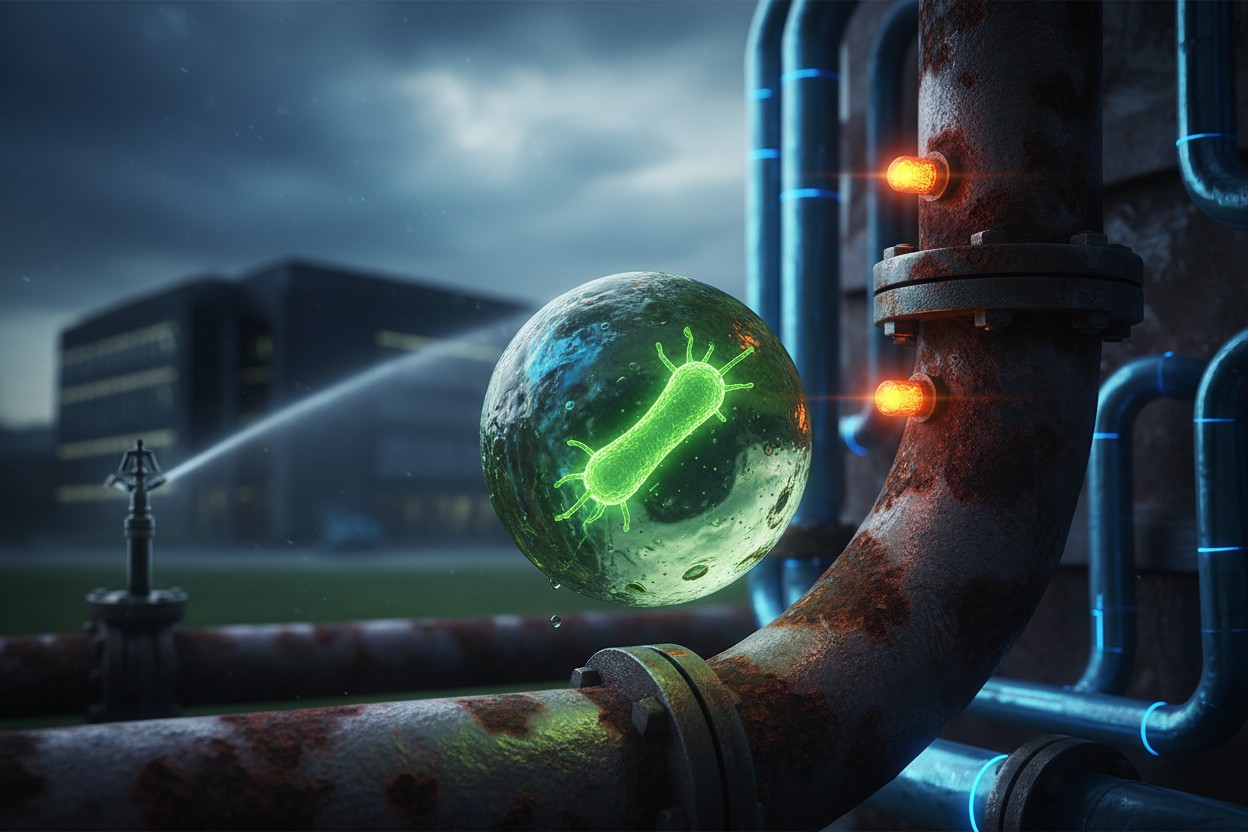
Biofilms are communities of bacteria that attach to surfaces, such as the interior walls of water pipes. These bacterial colonies produce a protective matrix that shields them from environmental threats, including disinfectants. While some biofilms are beneficial, those formed by pathogenic bacteria can pose risks inside drinking water distribution systems. Prior to this study, scientists had limited understanding of how nanoplastics might influence the interactions between bacteria, biofilms, and bacteriophages — viruses that infect bacteria.
Details of the Study’s Findings
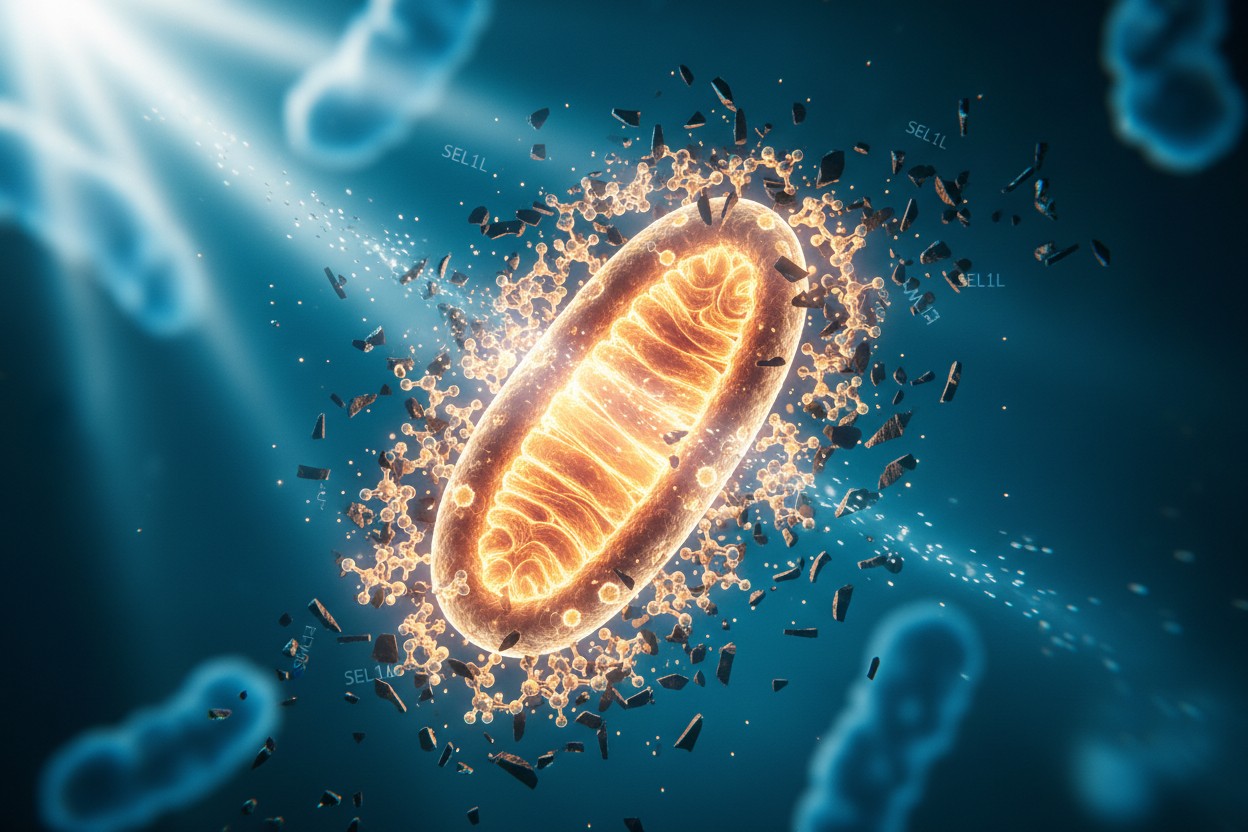
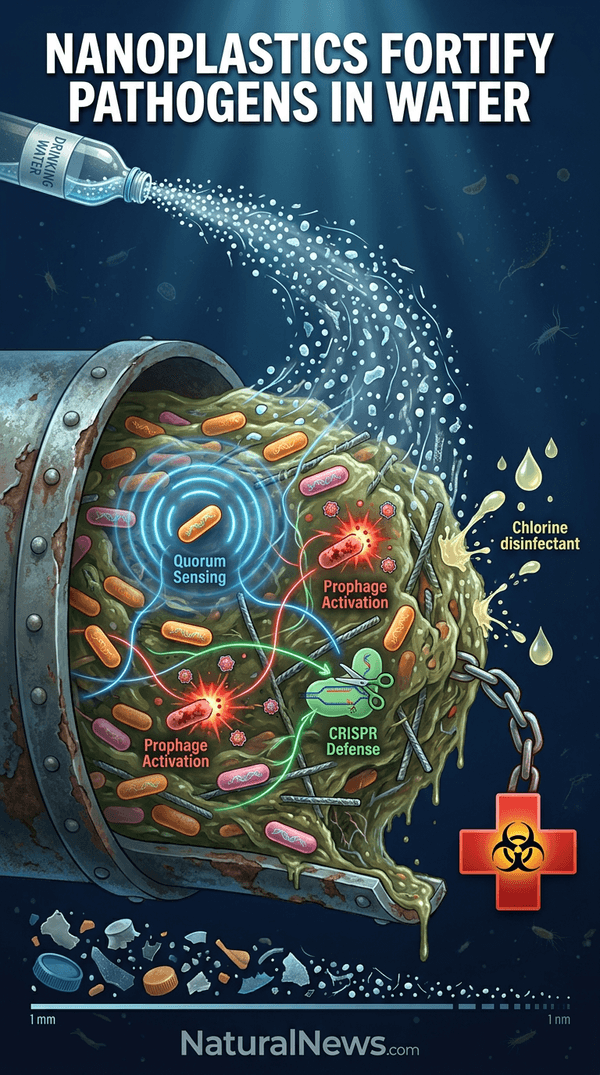
The researchers exposed biofilms consisting of E. coli and Pseudomonas aeruginosa to nanoplastics and observed three primary responses: quorum sensing, prophage activation, and CRISPR antiviral defense. Quorum sensing refers to chemical signaling among bacteria that coordinates group behavior, while prophage activation triggers dormant viruses within bacteria to become active, destroying host cells and releasing new virus particles. The bacteria also used CRISPR systems to defend against the prophages. According to the study, these responses led to a biofilm that was thicker, heavier, and more protective than untreated biofilms.
The increased mechanical strength of the biofilm, combined with enhanced resistance to disinfectants, highlights a potential challenge for water treatment and distribution systems. The authors wrote that “the increased mechanical strength of the biofilm and its resistance to the disinfectants highlight a potential challenge for water treatment and distribution systems, as nanoplastics may increase the formation of difficult-to-eradicate biofilms on the surface of some water treatment and distribution systems.” [ScienceDaily]
Implications for Water Treatment Systems
The study’s findings suggest that nanoplastics may complicate efforts to maintain clean drinking water. Tougher biofilms could become more difficult to remove from pipes and treatment equipment, potentially allowing harmful bacteria to persist even after standard disinfection. Liao noted that further research is needed to identify the molecular mechanisms driving these responses and to understand how particle size affects the interaction. Microplastics, which are larger than nanoplastics, may influence bacterium-phage dynamics differently, she said.
Waterborne nanoplastics are already widespread. A French government study found that glass bottles can contain five to 50 times more microplastics than plastic bottles, with contamination often originating from painted caps [3]. Meanwhile, the Environmental Protection Agency has placed microplastics on its “Sixth Contaminant Candidate List,” a step toward potential regulation [4]. The new research adds urgency to these monitoring efforts, according to the study authors.
Conclusion and Next Steps
The study concludes that nanoplastics may increase microbial risks associated with waterborne nanoplastics by strengthening biofilms and enhancing bacterial resistance. The authors call for additional investigations into how these particles affect complex, multi-species biofilms and emphasize the need for research on larger microplastics as well. Liao stated, “Overall, our findings provide novel insights into the interplay between nanoplastics and bacterium-phage dynamics, highlighting increased microbial risks associated with waterborne nanoplastics.” [ScienceDaily]
As plastic contamination continues to infiltrate water supplies, individuals can reduce exposure by using water filters designed to remove nanoparticles and avoiding bottled water when possible [5]. While broader regulatory action remains under discussion, the study underscores the importance of addressing plastic pollution to protect public health.
References
- ChildrensHealthDefense.org. “240000 Toxic Plastic Particles Found in Avera”. ChildrensHealthDefense.org.
- “Trends-Journal-2024-05-19”.
- “Think Glass Bottles Have Fewer Microplastics Than Plastic Ones? Think Again”. ChildrensHealthDefense.org.
- “EPA will begin monitoring microplastics and pharmaceuticals in drinking water, an issue that is driving hormone chaos and gut breakdown”. NaturalNews.com. April 03, 2026.
- Lance D Johnson. “A new dawn for clean water Off grid technology annihilates 99 of invisible NANOPLASTICS”. NaturalNews.com. January 27, 2026.
Explainer Infographic
Submit a correction >>
Tagged Under:
This article may contain statements that reflect the opinion of the author
RECENT NEWS & ARTICLES