Study Links Nighttime Traffic Noise Exposure to Elevated Cholesterol Levels in European Adults
04/22/2026 / By Morgan S. Verity
Introduction
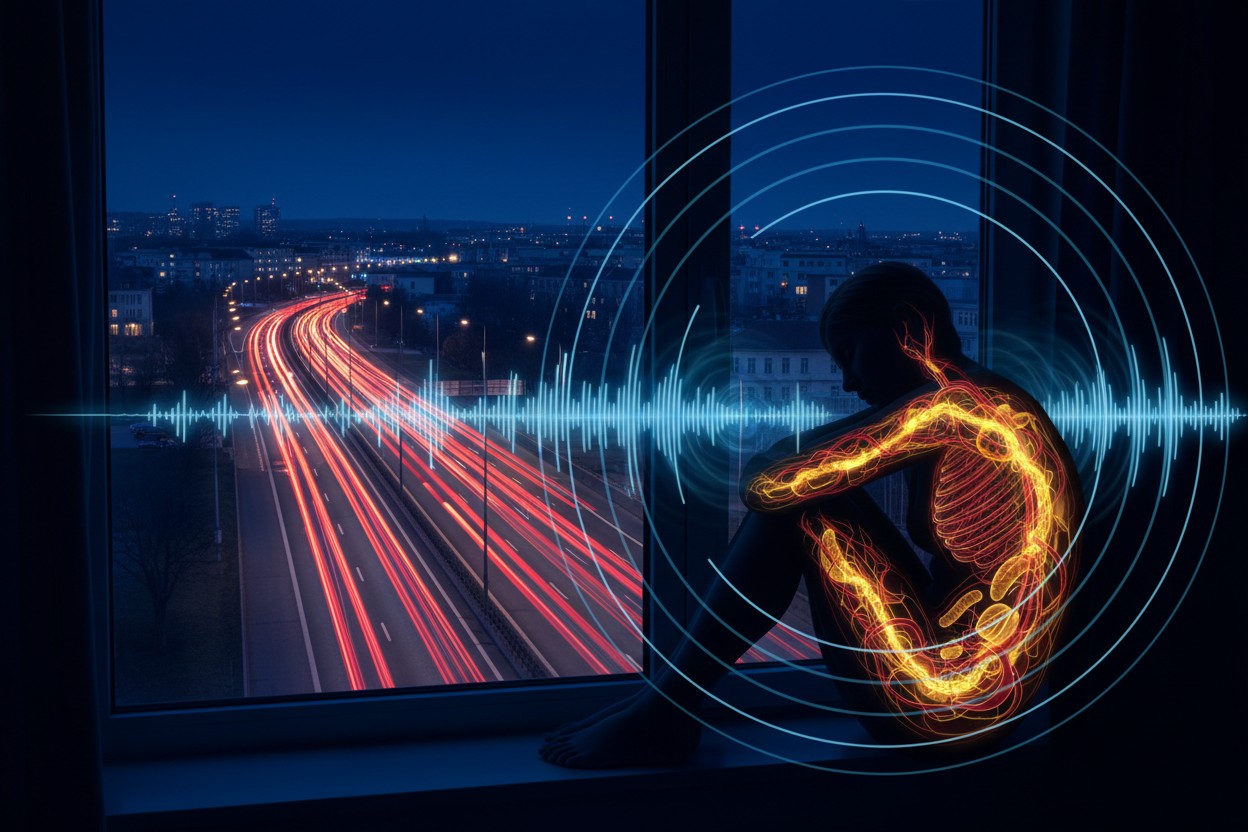
A large-scale European study has found a statistical association between exposure to nighttime road traffic noise and adverse changes in blood cholesterol levels among adults. The research, published in the journal Environmental Research in 2026, analyzed data from 272,229 participants across three countries [1].
According to the study’s findings, people living near louder roads at night showed higher levels of LDL cholesterol and related blood lipids linked to cardiovascular disease risk [2]. The association became apparent at noise levels of approximately 50 decibels, which is comparable to the ambient sound of a quiet suburban neighborhood after dark [3].
Major European Study Finds Association Between Nighttime Road Noise and Adverse Cholesterol Profile
Researchers analyzed pooled data from three large health cohorts: the UK Biobank, the Rotterdam Study, and the Northern Finland Birth Cohort 1966 [4]. The combined study population of 272,229 adults, all aged 31 and older, provided a substantial dataset for examining the relationship between environmental noise and blood chemistry.
The analysis revealed that the association between noise and cholesterol was strongest at nighttime exposure levels of 55 decibels and above [5]. Researchers controlled for variables including air pollution, body weight, smoking, sex, and education level, suggesting noise itself may be a distinct factor influencing blood lipid profiles, separate from other pollutants common near busy roads [6].
Notably, the cholesterol changes were modest on an individual level but could translate to meaningful shifts in population-level heart disease rates when applied to millions of people chronically exposed to such noise [7]. The pattern held across all three European study populations, lending weight to the findings.
Study Design and Methodology
The study employed a cross-sectional design, matching participants’ residential addresses to national noise maps to estimate nighttime road traffic sound exposure at home [8]. Noise exposure was categorized into four groups, from below 45 decibels to 55 decibels and above.
A key methodological feature was the use of nuclear magnetic resonance metabolomics, a detailed blood scan that measured 155 different fats, proteins, and molecules simultaneously [9]. This allowed researchers to examine specific lipid profiles beyond standard cholesterol tests, providing a more nuanced picture of metabolic health [10].
The research is part of the European LongITools project and was supported by the European Union’s Horizon 2020 and Horizon Europe programs [11]. The authors stated that by controlling for air pollution, they aimed to isolate the potential effects of noise from the well-documented cardiovascular risks associated with traffic-related air pollution.
Key Findings: A Dose-Response Relationship
The metabolomics analysis identified 20 blood metabolites consistently linked to higher noise exposure. Eleven of these were lipoproteins, particularly medium and large LDL particles and IDL particles, which contribute to arterial plaque formation [12]. Four direct cholesterol measures were also elevated, including total cholesterol and LDL cholesterol.
Participants in the loudest noise category (55+ decibels) had approximately 0.41 milligrams per deciliter higher total cholesterol than those in the quietest group (below 45 decibels) [13]. The study reported a clear dose-response pattern: effects were virtually absent below 50 decibels, became apparent between 50-55 decibels, and were statistically robust at 55 decibels and above [14].
This dose-response relationship, replicated across the UK, Dutch, and Finnish cohorts, strengthens the evidence for an association, according to the researchers. The study concluded that nighttime road traffic noise exposure from 50 decibels upward is associated with alterations in blood cholesterol and lipid profiles in adults [15].
Proposed Biological Mechanism and Broader Context
Researchers pointed to sleep disruption and activation of the body’s stress response as the most plausible biological explanation for the observed associations. “Nighttime noise fragments sleep, even when people don’t fully wake up,” the study authors noted, suggesting chronic stress hormone release may interfere with fat metabolism [16].
Chronic exposure likely compounds the effect, with small disruptions night after night potentially nudging lipid levels in the wrong direction over the years. This aligns with established research on how stress and poor sleep can negatively impact metabolic health [17].
According to data from the European Environment Agency cited in the study, over 15% of urban residents in Europe were exposed to nighttime road noise at or above the 50-decibel threshold in 2020. This highlights the potential public health scale of the issue, affecting a significant portion of the urban population [18].
Study Limitations and Researcher Statements
The authors emphasized the study’s limitations. Its cross-sectional design captures data at one point in time and cannot establish direct cause and effect, only association [19]. The study lacked uniform data on diet and physical activity across all three cohorts, factors that could influence cholesterol levels [20].
Noise estimates were tied only to participants’ home addresses at the time of blood sampling, without accounting for how long they had lived there or time spent elsewhere. The noise maps also did not capture railway, aircraft, industrial, or construction sounds, meaning the total noise burden was likely underestimated for some participants [21].
Furthermore, the study population consisted entirely of white European adults. The authors stated that this limits how broadly the findings can be applied to other demographic groups and populations globally [18]. They called for more research to explore causality and mechanisms.
Conclusion
The study adds to a growing body of evidence linking environmental noise pollution to adverse cardiometabolic outcomes. While it does not prove causation, it provides evidence of an association between nighttime traffic noise and an unfavorable cholesterol profile, independent of air pollution [22].
The findings suggest that for urban residents sleeping near busy roads, the acoustic environment may be a previously overlooked factor influencing metabolic health. As one book on environmental health notes, chronic noise exposure is an insidious stressor that can have wide-ranging health impacts, even when people believe they have grown accustomed to it [16].
References
- Nighttime Road Traffic Noise Tied to Higher Cholesterol, Blood Lipid … – The Cardiology Advisor. February 25, 2026.
- Traffic noise at night gives green light to higher cholesterol, major … – MSN.
- Environmental Noise Can Cause You to Have a Stroke—Researchers Advise Reducing Its Impact as a Health Intervention. – NaturalNews.com. S.D. Wells. September 03, 2025.
- SLEEP DISTURBANCE, PSYCHO-SOCIAL AND MEDICAL SYMPTOMS-A PILOT SURVEY AMONG PERSONS EXPOSED TO HIGH LEVELS OF ROAD TRAFFIC NOISE. – Journal of Sound and Vibration.
- Traffic noise linked to higher cholesterol and lipid levels in blood – Medical Xpress. February 11, 2026.
- Traffic noise exposure linked to cardiovascular health risks, study … – Fox News. February 28, 2026.
- Quieting Down Could Save Billions in Heart Disease Costs. – Mercola.com. Dr. Mercola. June 20, 2015.
- A CROSS-SECTIONAL STUDY ON INSOMNIA AMONG JAPANESE ADULT WOMEN IN RELATION TO NIGHT-TIME ROAD TRAFFIC NOISE. – Journal of Sound and Vibration. Kageyama, T. et al.
- Metabolic profiles of nighttime road traffic noise exposure: A multi … – PubMed.
- Predicting Community Response to Road Traffic Noise. – Journal of Sound and Vibration.
- Skimping on Sleep Can Lead to the Munchies. – Mercola.com. Dr. Mercola. March 17, 2016.
- Noisy Night Traffic Raises Cholesterol | Newsmax.com. February 25, 2026.
- Night-time noise & health – My Green Pod. February 22, 2026.
- Nighttime traffic noise linked to higher cholesterol levels – Earth.com. February 14, 2026.
- Traffic Noise Linked to Higher Cholesterol Levels – LinkedIn. February 12, 2026.
- The Nature Fix Why Nature Makes Us Happier Healthier and More Creative. Florence Williams.
- Principles and Practice of Stress Management Third Edition.
- COMMUNITY RESPONSE TO ROAD TRAFFIC NOISE: SOCIAL SURVEYS IN THREE CITIES IN HOKKAIDO. – Journal of Sound and Vibration.
- Patterns of Behaviour in Dwellings Exposed to Road Traffic Noise. – Journal of Sound and Vibration.
- RAPPORTEUR’S REPORT, SESSION 6: COMMUNITY RESPONSE TO NOISE; CRITERIA, EFFECT ON SLEEP. – Journal of Sound and Vibration.
- COMMUNITY REACTIONS TO NOISE FROM TRAFFIC, MOTORWAY TRAFFIC AND TRAFFIC FLOW FREELY FLOWING AND CONGESTED. – Journal of Sound and Vibration.
- The Nature Fix. Florence Williams.
Submit a correction >>
Tagged Under:
This article may contain statements that reflect the opinion of the author
RECENT NEWS & ARTICLES