Study using AI links trees to lower risk of cardiovascular disease
10/10/2026 / By Jacob Thomas
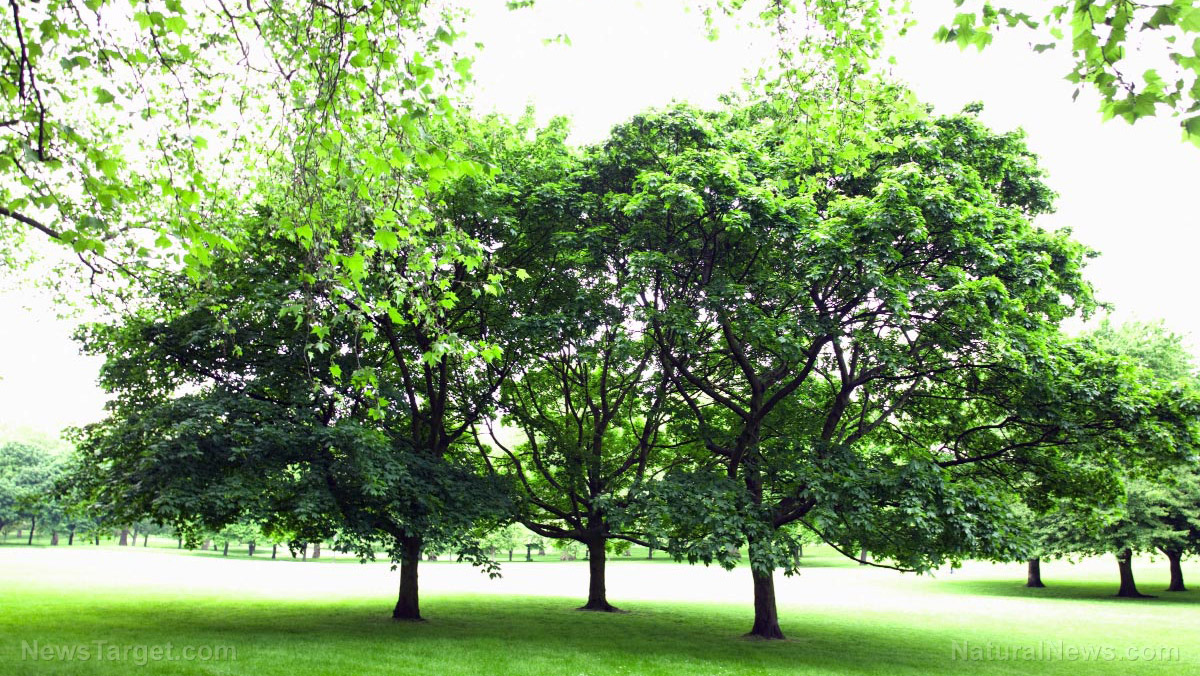
- A landmark study using artificial intelligence to analyze Google Street View images found that neighborhoods with more visible trees are linked to a lower risk of cardiovascular disease, while areas dominated by grass are associated with a higher risk.
- The research followed nearly 90,000 female nurses for 18 years. It innovatively used AI on street-level images to assess daily environmental exposure, moving beyond simple satellite “greenness” measures.
- Researchers suggest trees provide multifaceted benefits grass lacks, including cooling shade, air pollution filtration, noise reduction and encouragement of walkability. Grass-dominated areas often correlate with car-dependent sprawl and pollutant-generating maintenance.
- The protective association with trees was strongest within a 500-meter radius of a home, emphasizing that community-wide tree canopy is more impactful than just an individual yard.
- The findings argue for prioritizing tree canopy and connected, shaded neighborhoods in urban design, especially for climate resilience and public health, indicating that the type of greenery is a critical factor.
In a revelation that could reshape urban planning and public health initiatives, a landmark study has found that the type of green space outside your door matters profoundly for your heart. Groundbreaking research leveraging artificial intelligence (AI) and decades of health data indicates that living in a neighborhood with abundant trees is associated with a lower risk of cardiovascular disease, while areas dominated by grass show a surprising link to higher risk.
As noted by BrightU.AI‘s Enoch, cardiovascular disease is a broad term for conditions affecting the heart and blood vessels, including heart attacks, strokes and heart failure.
The study, led by Dr. Peter James from the University of California, Davis and published in Environmental Epidemiology, followed nearly 90,000 female nurses from the Nurses’ Health Study for 18 years. Researchers confirmed 6,065 heart attacks and strokes during that period. The innovative twist came in how they measured the environment: instead of relying on satellite imagery that simply detects “greenness,” the team analyzed over 350 million Google Street View images with AI to distinguish exactly what vegetation people see daily, trees, grass or shrubs.
The results were striking. Neighborhoods with more visible trees had approximately a 4% lower rate of cardiovascular events. Conversely, areas with more visible grass showed about a 6% higher rate. These are relative differences comparing neighborhoods and do not guarantee individual risk changes, but the consistent pattern across diverse U.S. communities suggests a significant environmental effect.
“For decades, we’ve lumped all green space together,” said James. His team’s work challenges that approach, indicating that “aggregating green space into a single exposure category limits epidemiological research and potential interventions to increase health-promoting green space.”
The protective association with trees was most evident within a 500-meter (about one-third of a mile) radius of a person’s home, highlighting the importance of neighborhood-scale canopy rather than just an individual yard. The link largely disappeared when looking only at the immediate 100 meters, suggesting community-wide tree coverage is key.
Why trees might protect and grass might not
While the study establishes a correlation, not direct causation, researchers propose several plausible mechanisms. Trees offer multifaceted benefits that grass cannot match.
A mature tree canopy provides significant cooling, mitigating heat stress on the cardiovascular system. Leaves filter harmful air pollutants and branches dampen traffic noise, a known contributor to high blood pressure. Tree-lined streets also inherently encourage walking and social interaction.
Grass, particularly in the form of expansive lawns, offers few of these benefits. It provides minimal cooling or air filtration. The maintenance of grass via gas-powered mowers generates noise and air pollution. Critically, the study notes that grass-dominated areas often signal car-dependent suburban sprawl with less walkability.
The analysis could not fully separate the effect of the grass itself from these broader neighborhood design patterns, meaning the higher risk association might reflect the less active lifestyle and environmental conditions typical of such areas.
The findings add a crucial layer to earlier research, such as a study featured in the Journal of the American Heart Association, which found that lush, verdant communities can lower cardiovascular risk. The new data clarifies that the composition of that greenery is vital.
As one expert noted in related research on greenspace and asthma, the effects are not uniform: “Our research indicates that, on balance, urban vegetation appears to do significantly more good than harm. However, the effects are not uniform everywhere.”
That expert pointed to a critical interaction with pollution: Trees can effectively remove pollutants from the air, which might explain why they appear to be most beneficial where concentrations are high.
Implications for a hotter, more urban future
The study carries urgent implications for city planners and public health officials. As climate change intensifies urban heat and air quality challenges, prioritizing tree canopy over turfgrass could deliver measurable health dividends. The research argues for protecting mature trees during development and focusing planting efforts on creating connected, shaded neighborhoods.
Some limitations remain. The cohort was predominantly white and female, raising questions about generalizability. Researchers also couldn’t track participants’ daily movements or time spent outdoors. Nonetheless, the scale and duration of the study, combined with its novel methodology, make a compelling case.
The takeaway is clear: from a heart-health perspective, not all green space is equal. The gentle shade of a sweetgum tree lining a sidewalk appears to be a quiet guardian of cardiovascular health, while an unshaded expanse of grass may tell a different story about the landscape of well-being. As cities grow and evolve, this research suggests that the choice between planting a tree and sowing a lawn is more than aesthetic; it might be a matter of life and breath.
Watch this video to learn more about heart disease.
This video is from Sanjaysmith’s channel on Brighteon.com.
Sources include:
Submit a correction >>
Tagged Under:
This article may contain statements that reflect the opinion of the author
RECENT NEWS & ARTICLES