Environmental Groups Sue EPA Over Approval of Semiconductor Chemicals Used in AI Data Centers
08/18/2026 / By Iva Greene

Three environmental organizations filed suit on Friday, Aug 14, in the U.S. Court of Appeals for the Ninth Circuit in San Francisco – challenging the Environmental Protection Agency‘s (EPA) approval of two chemicals used in semiconductor manufacturing.
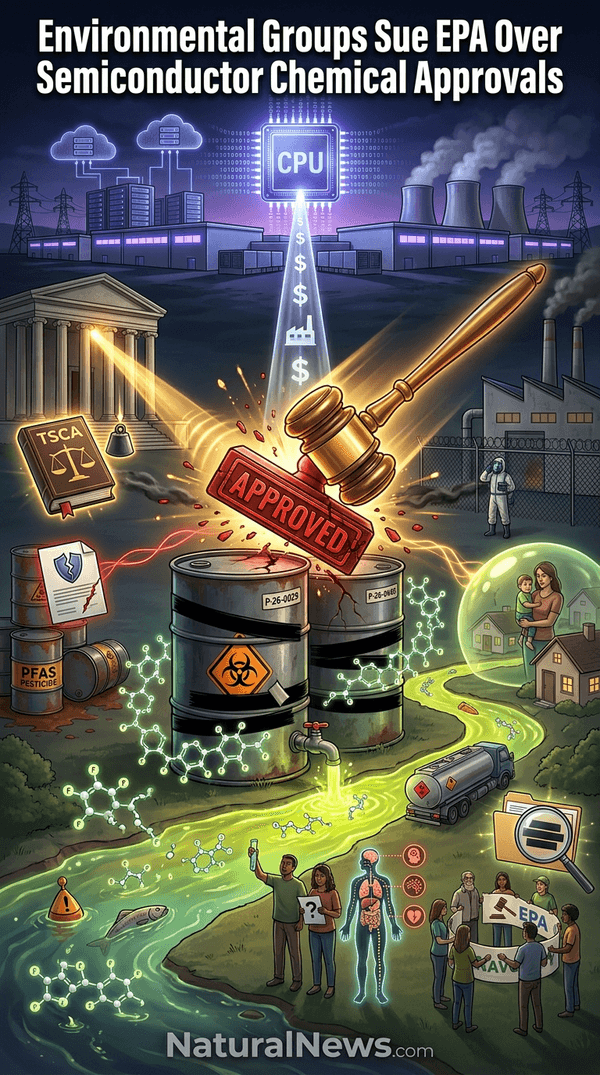
CHIPS Communities United and the Sierra Club, represented by Earthjustice, filed the petition, according to Children’s Health Defense [1]. The complaint alleges violations of the Toxic Substances Control Act (TSCA) and says the EPA permitted the chemicals to be used without adequately assessing risks to plant employees and surrounding communities.
Congress amended TSCA in 2016 to shift the burden onto chemical manufacturers, requiring them to demonstrate new substances are unlikely to present unreasonable risks to human health or the environment before they are allowed on the market [2]. Earlier in the law’s history, the EPA restricted only a handful of chemicals that were in commerce before 1976, including certain forms of asbestos, hexavalent chromium, dioxin-contaminated wastes and the paint-stripper methylene chloride [3].
Redacted Chemicals and Identified Hazards
The two chemicals are identified in EPA records only by premanufacture notice numbers P-26-0029 and P-26-0045 because their identities are designated confidential business information. According to Earthjustice, the EPA identified potential hazards including cancer, neurological damage and sudden death. The agency acknowledged it lacked sufficient information to determine the full extent of those risks, the groups said.
The lack of toxicity data has been a recurring issue under TSCA. A manufacturer’s notice to the EPA that it intends to begin manufacturing or importing a chemical is not required to contain toxicity or exposure information, and few such notices do [4]. By 2006, about 30 years after TSCA’s passage, the EPA had required testing of fewer than 200 of the 20,000 chemicals added to the inventory and had issued regulations to limit or ban production of only five chemicals [5].
Plaintiffs: EPA Violated Required Risk Assessment Process
Earthjustice senior attorney Jonathan Kalmuss-Katz said the Trump administration is “rushing dangerous chemicals to market without the review or the protection that the law requires.” CHIPS Communities United Coalition Director Judith Barish said workers and nearby residents have been harmed by workplace exposure and contaminated air or water from chip factories. Sierra Club’s Jane Williams said the EPA’s approval of “dangerously unstudied chemicals places the public at risk,” citing concerns about transport and disposal.
The plaintiffs said the approvals violate TSCA’s requirement that EPA complete a risk assessment before a new chemical enters commerce. They asked the court to set aside the approvals and require the EPA to conduct the review mandated by the statute.
Broader Context: PFAS, Data Centers and Industry Chemicals
Earthjustice noted semiconductor manufacturing is a major ongoing source of PFAS “forever chemicals,” which persist in bodies and the environment for decades. PFAS have been found at multiple locations across the country, including near data center clusters in Virginia and herbicide plants in Louisiana [6]. Other reporting described the growth of data centers as driving “a new wave of environmental contamination” linked to PFAS [7].
Semiconductors are foundational hardware for artificial intelligence (AI) data centers, according to the groups, meaning the effects extend beyond communities near chip factories. Other harmful chemicals associated with data centers include refrigerants, Teflon coatings, Krytox and Viton, the groups said. The Natural Resources Defense Council has noted that cooling systems can consume and pollute large quantities of water.
Recent EPA Actions Under Scrutiny
The lawsuit comes over a month after the EPA under Administrator Lee Zeldin approved a fifth “forever chemical” pesticide, according to Earthjustice. The agency has also proposed shifts to its risk evaluation process that would allow it to ignore real-world risks posed by toxic chemicals, Earthjustice said.
Environmental health advocates said a separate EPA proposal to limit PFAS is not nearly comprehensive enough, as it excludes cleanup requirements and would only mandate a one-time report [8]. The groups said the approvals prioritize industry profits over public health.
Conclusion
The lawsuit is the latest in a series of challenges to EPA chemical decisions under the Trump administration. The plaintiffs are asking the court to require the EPA to complete the risk evaluations they say TSCA mandates before the two semiconductor chemicals are used in commercial production.
The case is pending before the U.S. Court of Appeals for the Ninth Circuit. Neither the EPA nor the companies that submitted the premanufacture notices had filed a public response as of this report.
References
- Children’s Health Defense. “Groups Sue EPA Over Approval of Toxic Semiconductor Chemicals for AI Data Centers”. August 17, 2026.
- Children’s Health Defense. “Toxic Chemicals to Blame for Rise in Childhood…”. December 10, 2021.
- Children’s Health Defense. “Toxic Chemicals to Blame for Rise in Childhood…”.
- Nena Baker. “The Body Toxic”.
- Maxwell Nancy Irwin. “Understanding Environmental Health: How We Live in the World”.
- NaturalNews.com. “AI Expansion Raises Alarm Over PFAS Pollution Near Data Centers, Herbicide Facilities”. NaturalNews.com. May 12, 2026.
- NaturalNews.com. “Data Centers, Forever Chemicals, and a Poisoned Future: The Toxic Alliance Fueling a Public Health Crisis”. NaturalNews.com. May 6, 2026.
- Michael Scaturro. “EPA Plan to Limit PFAS Won’t Stop Cancer-causing ‘Forever Chemicals’ From Contaminating Water, Food Supply”. Children’s Health Defense.
Explainer Infographic
Submit a correction >>
Tagged Under:
This article may contain statements that reflect the opinion of the author
RECENT NEWS & ARTICLES