From Nazi Labs to Your Plate: The True, Deadly History of Glyphosate
02/20/2026 / By Mike Adams
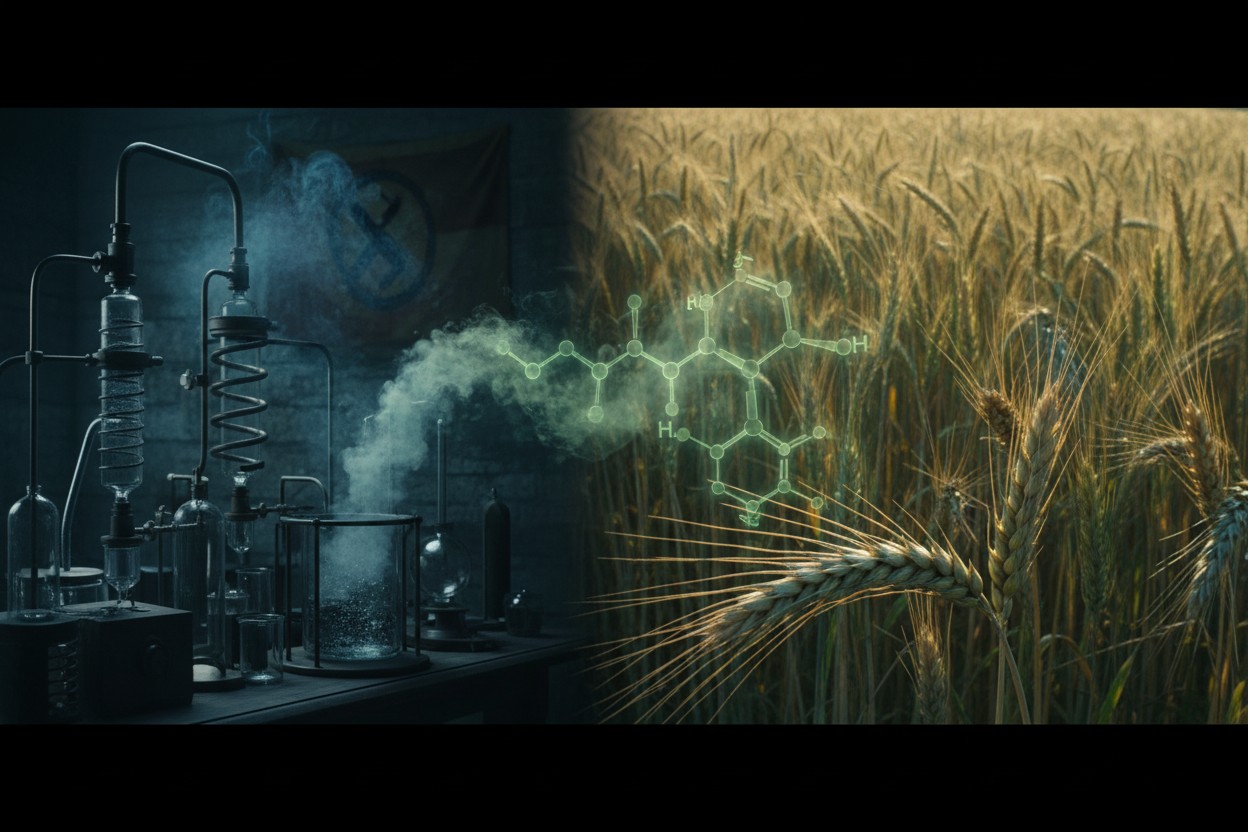
Introduction: The Executive Order That Reveals the Truth
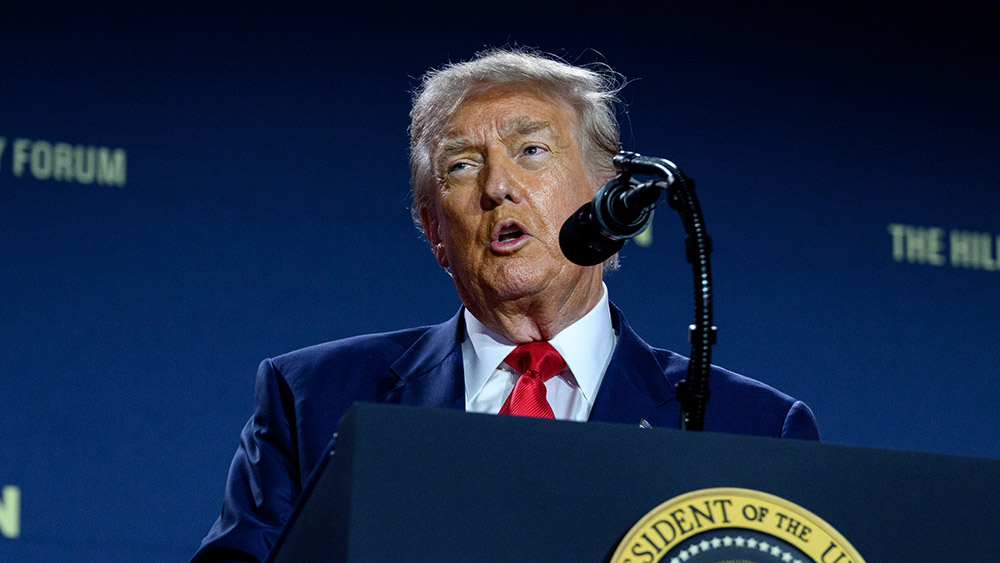
On February 18, 2026, President Donald J. Trump signed an executive order invoking the Defense Production Act to designate glyphosate—the active ingredient in the world’s most widely used herbicide—as a “critical resource” for national defense [1]. This action, titled ‘Promoting the National Defense by Ensuring an Adequate Supply of Elemental Phosphorus and Glyphosate-Based Herbicides,’ placed the production and stockpiling of this controversial chemical under the purview of the Secretary of War. For the average American, the immediate question is obvious: Why is a common agricultural weedkiller suddenly declared a matter of national security, bundled with white phosphorus munitions?
The answer lies not in agriculture, but in warfare. The order reveals a dark, unbroken lineage that connects the chemical sprayed on your breakfast cereal to the nerve agents stockpiled by militaries. This is the story of how a class of chemicals engineered for mass death in World War II was repackaged and sold to the world as a tool for modern farming. It is a tale of corporate profit, government collusion, and the systematic, slow-motion poisoning of the global population.
To understand why a sitting president would weaponize the food supply, we must trace this chemical thread back to its origins in the 1930s, within the laboratories of the very corporate conglomerate that fueled the Nazi war machine and manufactured the poison for the Holocaust’s gas chambers.
Chapter 1: The Nazi Origins of Organophosphate Warfare
The genesis of glyphosate is not found in a quest for agricultural innovation, but in a search for more efficient tools of human extermination. The story begins with IG Farben, the German chemical and pharmaceutical giant that was the financial engine of the Third Reich [2]. This conglomerate supplied Zyklon B, the pesticide used in the gas chambers of Auschwitz, and was responsible for countless crimes against humanity using slave labor. From this same corporation emerged the foundational science for the modern organophosphate chemical industry.
IG Farben chemist Dr. Gerhard Schrader, while attempting to develop a new insecticide in 1936, accidentally synthesized Tabun, the world’s first nerve agent [3]. This discovery was not an isolated event. Schrader’s research, funded by the Nazi regime, soon yielded an even more lethal compound: Sarin [4]. These nerve agents were designed to kill by irreversibly inhibiting the enzyme acetylcholinesterase, causing the nervous system to overload and leading to a horrific death by asphyxiation and convulsions. The core molecular architecture of these weapons was an organophosphate compound—a phosphorus-based molecule engineered for maximum toxicity to nervous systems.
Following Germany’s defeat, the victorious Allies did not dismantle this deadly science. Instead, they absorbed it. Under the post-war settlement, IG Farben was formally broken up. Its constituent parts, however, did not disappear; they became some of the world’s largest chemical and pharmaceutical companies: Bayer, BASF, and Hoechst (later absorbed into the French pharmaceutical giant Sanofi) [2]. The patents, research, and chemical expertise for organophosphates did not vanish. They were transferred intact to these corporate successors, laying the foundation for a global industry. The poison pipeline from the Nazi war machine to global agribusiness was now open.
Chapter 2: Operation Paperclip and the Weaponization of Peace
The covert transfer of Nazi scientific expertise to the United States and United Kingdom, known as Operation Paperclip, was not limited to rocket scientists. It included chemists and weapons developers specializing in nerve agents [5]. This program ensured that the advanced organophosphate research pioneered by IG Farben would continue unabated, merely shifting its headquarters from wartime Germany to the Cold War laboratories of the Pentagon and its corporate partners.
This direct lineage is starkly illustrated by the development of VX nerve gas, one of the most toxic substances ever created. VX was the progeny of a class of organophosphate pesticides [6]. In the 1950s, the British company Imperial Chemical Industries (ICI) was developing a pesticide called Amiton. It was soon discovered that Amiton was extraordinarily toxic to mammals. Rather than discarding the formula, its potential as a weapon was seized upon. Amiton was modified into the V-series nerve agents, with VX becoming a cornerstone of the U.S. chemical weapons arsenal [7]. The pesticide and chemical weapons industries were, and remain, two sides of the same coin.
The civilian consequences were immediate and tragic. In the 1950s, field workers in the UK handling a related organophosphate pesticide called TETRAM collapsed with symptoms identical to nerve agent poisoning: convulsions, respiratory failure, and paralysis [8]. This was not an anomaly but a proof of concept. The same compounds designed to disrupt the nervous systems of insects were doing the same to humans. The military-industrial pipeline had begun leaking its most toxic products into the civilian sphere, rebranding weapons of war as tools for agricultural ‘progress.’
Chapter 3: Glyphosate – A Nerve Agent for Plants
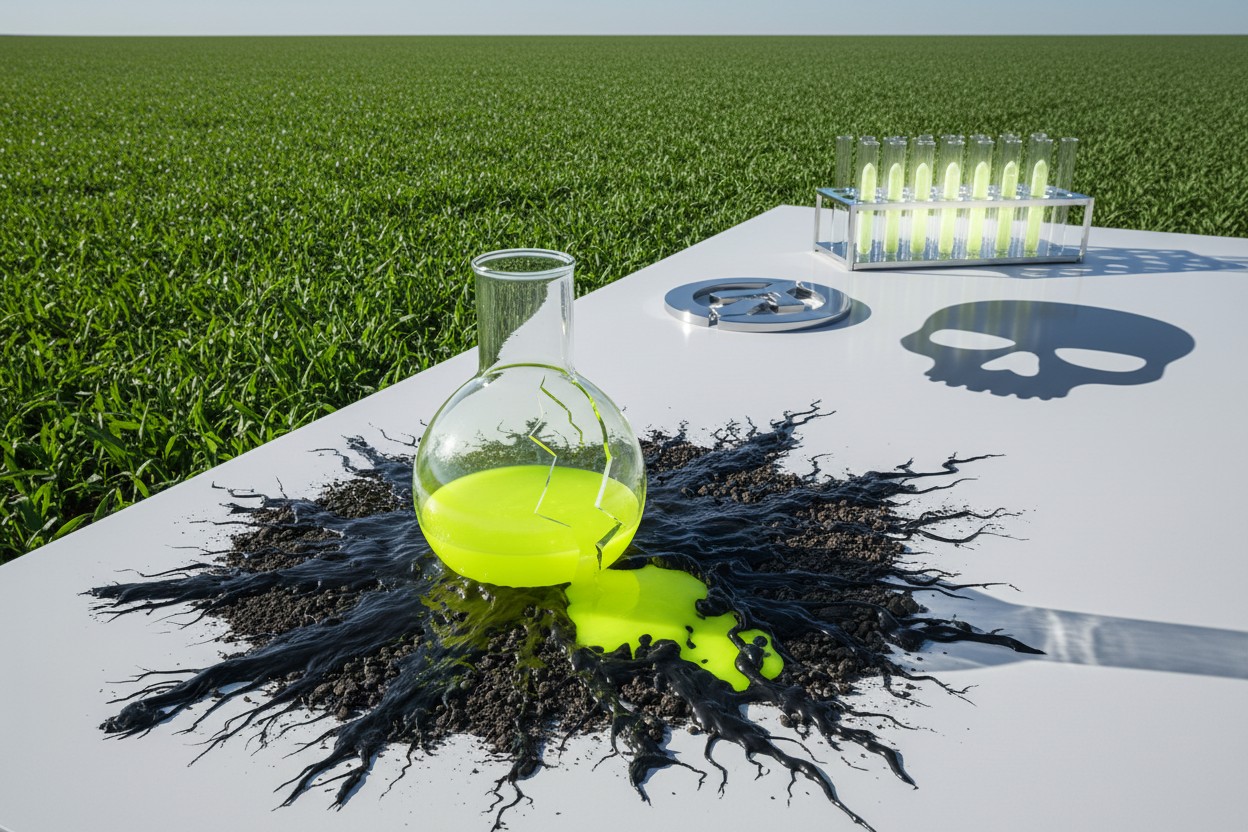
In 1974, the Monsanto Corporation introduced glyphosate under the trade name Roundup. Marketed as a revolutionary, ‘safe’ herbicide, its core molecule shares the same phosphorus-oxygen (P=O) ‘warhead’ that defines nerve agents like Sarin and VX [9]. While its primary mechanism targets a plant enzyme (EPSP synthase) not present in humans, this narrow targeting is a semantic diversion. The chronic, systemic effects of glyphosate exposure on human biology are devastating and multifaceted.
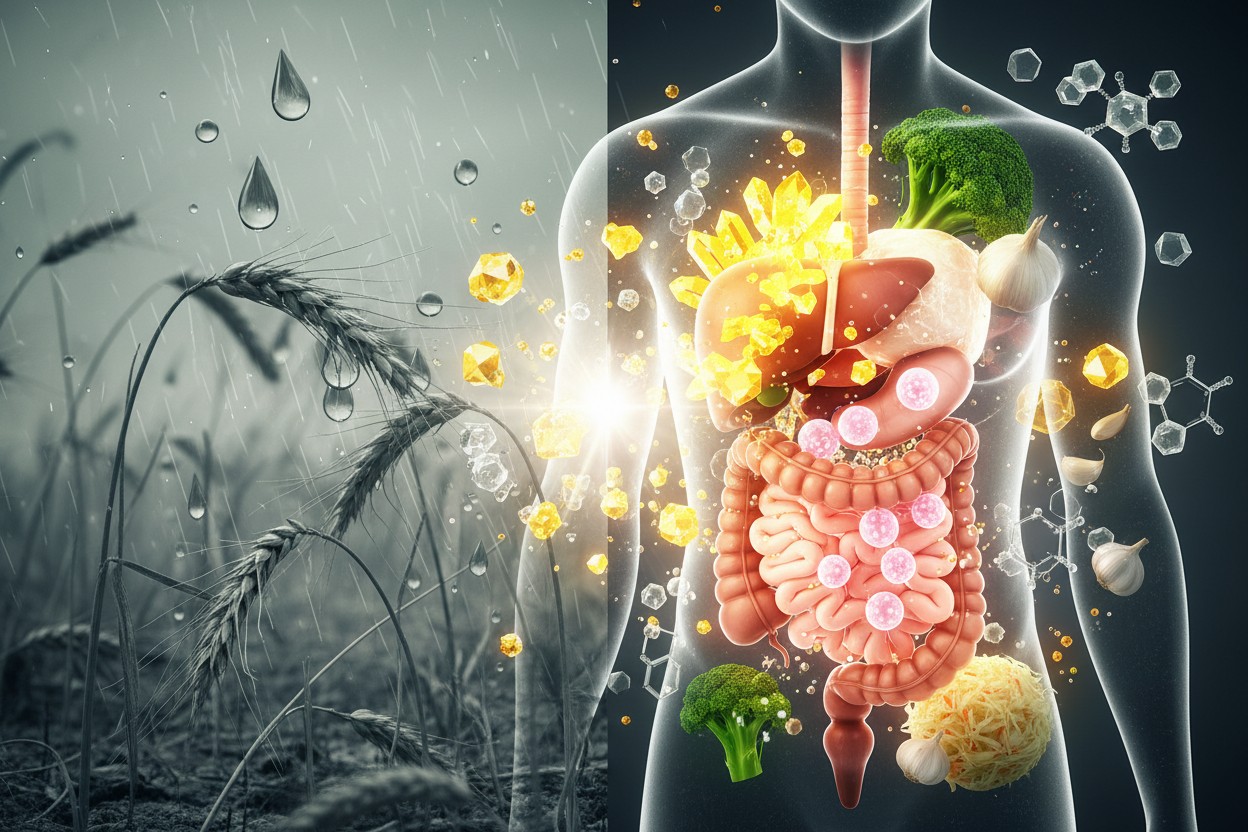
Glyphosate acts as a broad-spectrum antibiotic, decimating the beneficial gut microbiome. This destruction of internal ecology is linked to the explosion of autoimmune disorders, gastrointestinal diseases, and metabolic dysfunction [10]. Furthermore, glyphosate is a potent chelator, binding to essential minerals like zinc, manganese, and cobalt, rendering them biologically unavailable and crippling critical enzyme systems throughout the body [11]. Perhaps most insidiously, it functions as an endocrine disruptor, interfering with hormonal signaling at minute concentrations and contributing to reproductive disorders, developmental problems, and cancers.
The public exposure is not merely from weed control. Glyphosate is routinely used as a desiccant—a drying agent—sprayed directly onto non-GMO crops like wheat, oats, barley, and lentils just before harvest [10]. This practice ensures the poison is not washed off; it is baked into the grain itself, resulting in direct, unavoidable contamination of staple foods. From breakfast cereal to bread, the chemical warfare legacy is delivered daily to the family table.
Chapter 4: The Domestic Chemical War on the Public
Glyphosate is not an outlier; it is the poster child for a broader chemical assault. Common household insecticides like Malathion, which is sprayed over cities for mosquito control, and the repellent DEET are indirectly derived from organophosphate research, although they do not share the same chemical structure [12].
The regulatory agencies tasked with protecting the public have instead become captured guardians of industry profit. In 2015, the International Agency for Research on Cancer (IARC), the World Health Organization’s cancer research arm, classified glyphosate as a ‘probable human carcinogen’ [10]. The U.S. Environmental Protection Agency (EPA) responded not with a ban, but with a vigorous defense of the chemical, ignoring its own scientists and a mountain of independent evidence [12]. This pattern of regulatory malfeasance is a hallmark of the chemical-industrial complex, where agency officials routinely cycle through high-paying jobs in the industries they were supposed to regulate.
The result of this decades-long campaign is a ‘great dumbing down’ of the population. Chronic, low-dose exposure to organophosphates is linked to collapsing IQ, neurodegenerative diseases like Parkinson’s and Alzheimer’s, and a host of autoimmune and chronic illnesses [13]. Harvard Medical School professor David Bellinger has estimated Americans have lost a staggering 16.9 million IQ points due to exposure to organophosphate pesticides [13]. This is not an accident; it is the calculated cost of doing business for an industry born from warfare.
Chapter 5: Detox, Defy, and Decentralize: A Path to Freedom
Resisting this chemical assault requires immediate, decisive personal action. The first and most critical step is to sever the pipeline of poison entering your body. Immediately eliminate all genetically modified (GMO) foods from your diet, as they are engineered to withstand heavy glyphosate spraying. Reject all conventional grains, especially wheat and oats, which are most likely to be desiccated with the herbicide. Your only safe option is to purchase certified organic foods or, better yet, foods that have been laboratory-tested and verified to be free of glyphosate and other toxic residues.
The second action is to rebuild the foundations of health from the ground up—literally. Support and engage in regenerative organic agriculture, which heals soil microbiomes instead of destroying them with chemicals. If possible, start a home garden. Growing your own food is the ultimate act of defiance and self-sufficiency, allowing you to bypass the contaminated industrial food system entirely. As food forensics researcher Mike Adams notes, ‘Your toxic burden is largely related to your purchasing decisions and lifestyle’ [14]. By taking control of your food source, you take control of your health.
The final, imperative step is political and philosophical. We must demand a total ban on all organophosphate pesticides and reject the Orwellian narrative that glyphosate is a ‘national security’ asset. Trump’s 2026 executive order is a stark admission: the state views the chemical control of the food supply—and by extension, the population—as a strategic weapon [1]. True security does not come from stockpiling poisons; it comes from decentralized, resilient, clean food production. We must reject the toxic legacy of Nazi science and the corporate-state complex that perpetuates it.
Reject the Military-Industrial-Agricultural Complex
The journey of glyphosate from the laboratories of IG Farben to the fields of American agribusiness is a direct line through history. It is a story of weapons rebranded as conveniences, of mass death repurposed for mass profit. The 2026 executive order is not an anomaly; it is the logical endpoint of this history, an official declaration that the state considers the means to poison the population a strategic resource.
This is the essence of the military-industrial-agricultural complex: a seamless merger of corporate power, weaponized science, and government complicity. Stockpiling phosphorus for glyphosate production has nothing to do with food security and everything to do with maintaining the infrastructure for a slow, silent war against public health and cognitive capacity.
Liberation from this system is not found in appeals to captured institutions. It is achieved through individual sovereignty and community resilience. True health and freedom spring from clean living, decentralized food production, and a wholesale rejection of the systems that profit from our sickness. The tools for this liberation—knowledge of natural health, access to clean food, and community networks of mutual aid—are already in our hands. The choice is whether we continue to accept the poison on our plate, or finally spit it out and reclaim our birthright to vitality and freedom.
Research more about glyphosate at BrightAnswers.ai and read well-researched, highly-informative articles about glyphosate at NaturalNews.com
References
- Trump Becomes the Glyphosate President: Declares Deadly Weed Killer a National Defense Resource. NaturalNews.com. 2026.
- The Nazi origins of deadly nerve gases – C&EN. cen.acs.org.
- Gerhard Schrader: Father of the Nerve Agents. healthandenvironment.org.
- Sarin, synthetic organophosphate compound that is highly toxic to the nervous system. Britannica.
- How the Nazis Invented Nerve Agents like Sarin. YouTube.
- Organophosphorus Nerve Agents: Types, Toxicity, and Treatments. PMC.
- The History of Nerve Agents. University of Bristol.
- Cancer Hazards Parathion Malathion Diazanon Tetrachlorvinphos and Glyphosate. Martha Richmond.
- The history and current status of glyphosate. PubMed.
- Slashes Your Level of This Toxin by 60 in Just. Mercola.com. Dr. Mercola.
- Why Kale May Not Always Be a Superfood. Mercola.com. Dr. Mercola.
- EPA Refuses to Ban Neurotoxic Pesticide Found in 87 Percent of Newborns. Mercola.com. Dr. Mercola.
- Special Alert Its Make or Break TimeAct No. Mercola.com. Dr. Mercola.
- Our Daily Poison A Stark Look at Our Toxi. Mercola.com. Dr. Mercola.
Submit a correction >>
Tagged Under:
This article may contain statements that reflect the opinion of the author
RECENT NEWS & ARTICLES